Door lock repair for homes and businesses
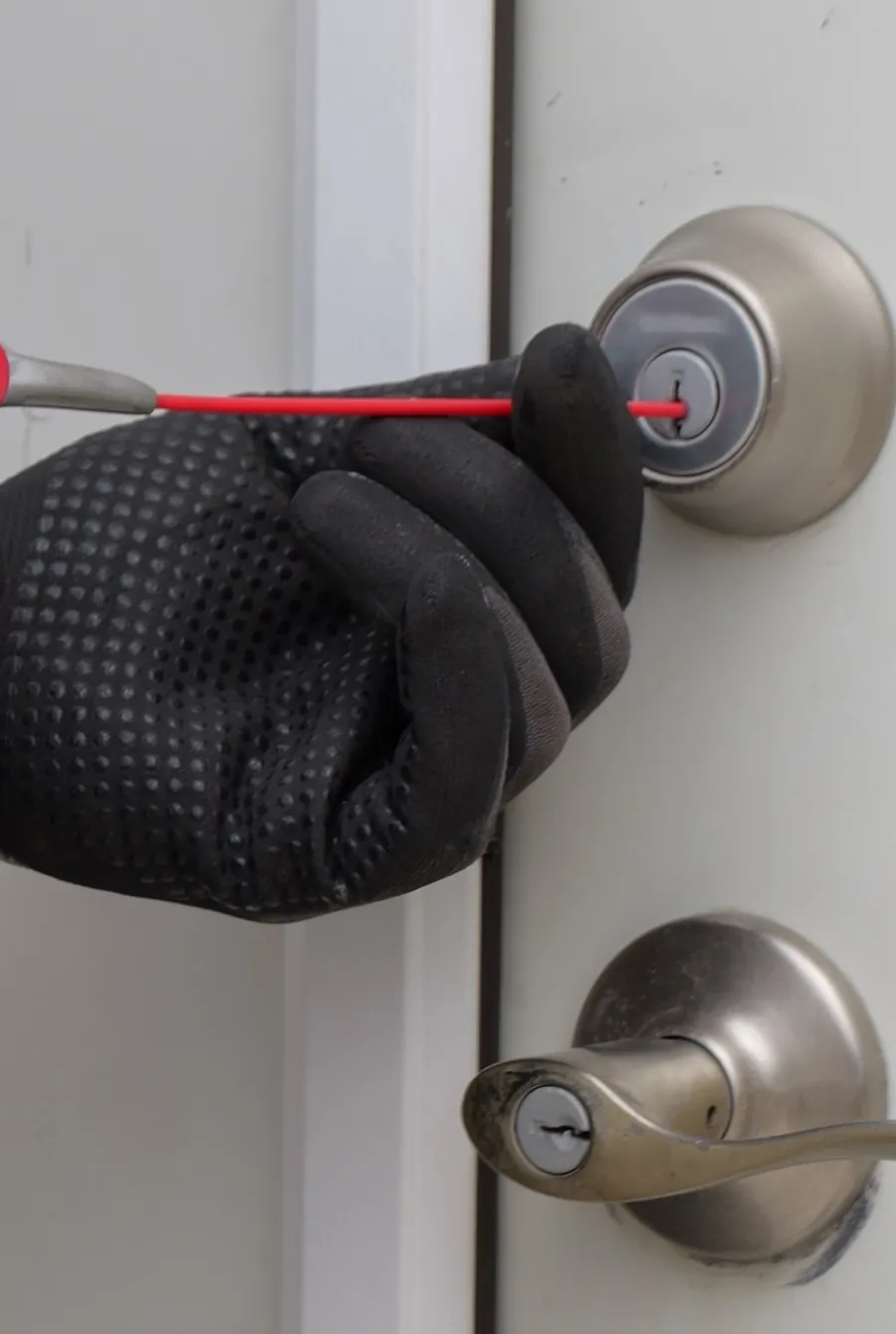
Key Rescue Florida repairs knobs, levers, deadbolts and business locks across the county, from Delray Beach and Boynton Beach to West Palm Beach. Calls are answered 24/7, and the service vehicle carries spare springs, pins, screws and other lock parts, so many fixes can be finished during the visit.
Repair keeps the hardware you have. If a lock is beyond saving, a lock change is the answer; if it works but the wrong people hold keys, the job is a rekey.
What the symptom tells you
Before you call, try the lock with the door open and then closed. That one test sorts most problems into two kinds: trouble inside the lock, and trouble between the lock and the frame.
- Key goes in but turns hard: grit, corrosion or worn pins inside the cylinder, the barrel the key turns.
- Deadbolt throws easily with the door open but not shut: the bolt is hitting the strike plate, the plate on the frame with an opening for the bolt. Deadbolt repair here is usually alignment, not new parts.
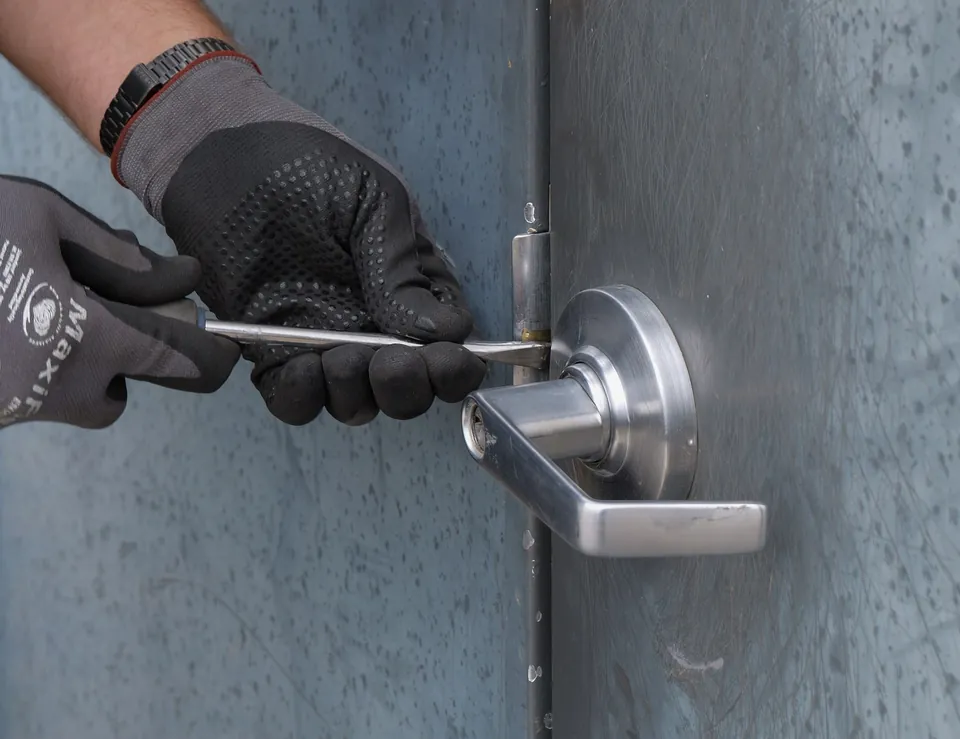
- Knob or lever wobbles or droops: loose mounting screws, or a worn spring inside the handle or latch.
- Latch won't catch when the door closes: the latch and strike plate no longer line up, or the latch spring has weakened.
- Key stops partway in: debris, a bent key, or a piece of an old key still inside. For that last one, see broken key extraction.
Why a sticking lock gets worse near the coast
Inside every cylinder, small brass pins and springs have to slide freely. Salty, damp air off the ocean and the Intracoastal Waterway leaves a film of corrosion on them, grit clings to that film, and each turn takes a little more effort than the last.
What you can safely do: puff powdered graphite or a lubricant made for locks into the keyway, then work the key a few times. Leave household oil on the shelf; it stays tacky and collects sand and dust, so a stiff lock can end up seized.
If the key still drags, stop. A key that keeps getting harder to turn is telling you something, and twisting harder is how a key ends up in two pieces.
What helps before we arrive
Tell us the kind of door and lock, and when the problem shows up: always, only with the door shut, or only with one key. Keep every key for that lock nearby, since a worn key can feel exactly like a worn lock.
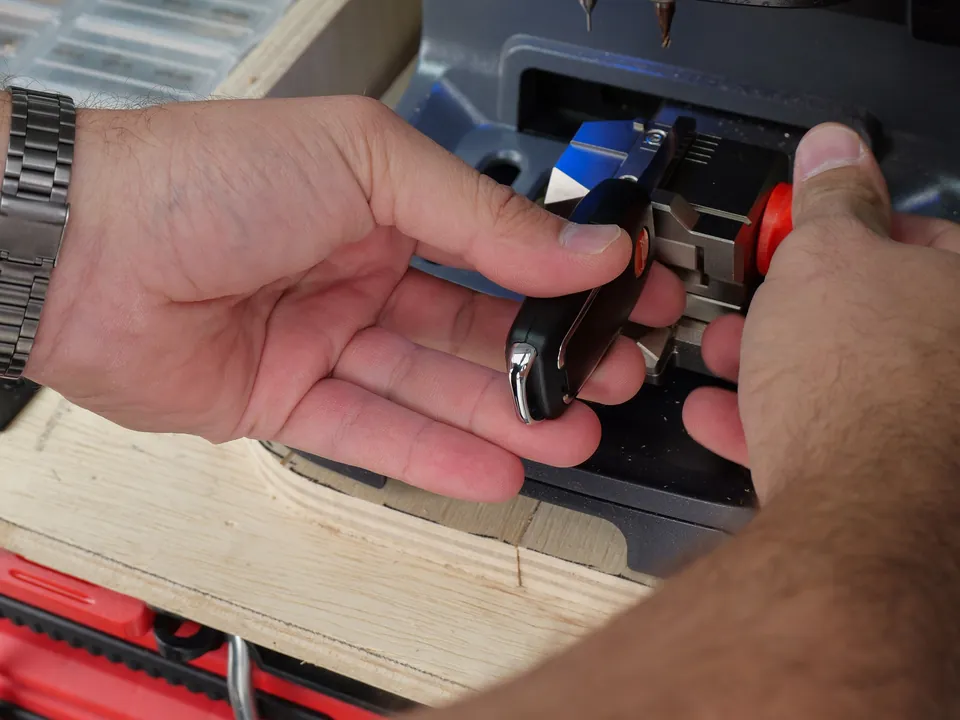
If the repair means opening a locked door or cutting new keys, we check ID first. At a home: an ID with a photo and the address, or a lease, a power or water bill, closing papers or a property-tax bill; a word from the property manager or HOA may stand in. Business locks need photo ID plus a document connecting you to the business, or the owner's or manager's approval.
When repair isn't worth it
Some locks are past saving: a cylinder corroded through, a cracked housing, or a lock whose inner parts aren't sold on their own. We tell you before work begins, and if something else turns up once the lock is open, you hear the revised price before we go further.
If the door has settled on its hinges so the bolt no longer meets the strike plate squarely, the lock isn't at fault. Adjusting the strike plate can sometimes help; when the door itself is the problem, we say so plainly. Levers on busy business doors are covered on our commercial locksmith page.